

Insurance coverage for hearing care is built on a dirty secret: standard benefit sheets are often designed to sound generous while paying out exactly nothing. When a health insurance representative tells you that your plan covers "50% of the allowable amount," most people assume that means real financial assistance.
In reality, it's often a game of smoke and mirrors meant to protect corporate profit margins at the expense of your ability to hear and communicate with your family.
We recently had an experience in our clinic with a patient named Tammie that exposes this game for what it truly is and why relying on insurance directories to direct your hearing care usually leaves you with the short end of the stick.
The Honest Framing: Profits Over Patients
Health insurance companies exist to serve their shareholders, not your quality of life.
They obscure coverage details behind vague terminology like "allowable amounts" because if patients actually understood how little their policies cover, they would stop letting insurance networks dictate their clinical decisions.
When an insurer refuses to state their allowable amount upfront, they’re setting you up for a financial bait-and-switch.
They entice individuals to sign up under the false pretense of partial coverage, only to drop the hammer after clinical care has already been delivered. It is a system rigged against exceptional clinical outcomes, leaving patients frustrated and right back where they started.
The Story: How Anthem Played the $0 Game
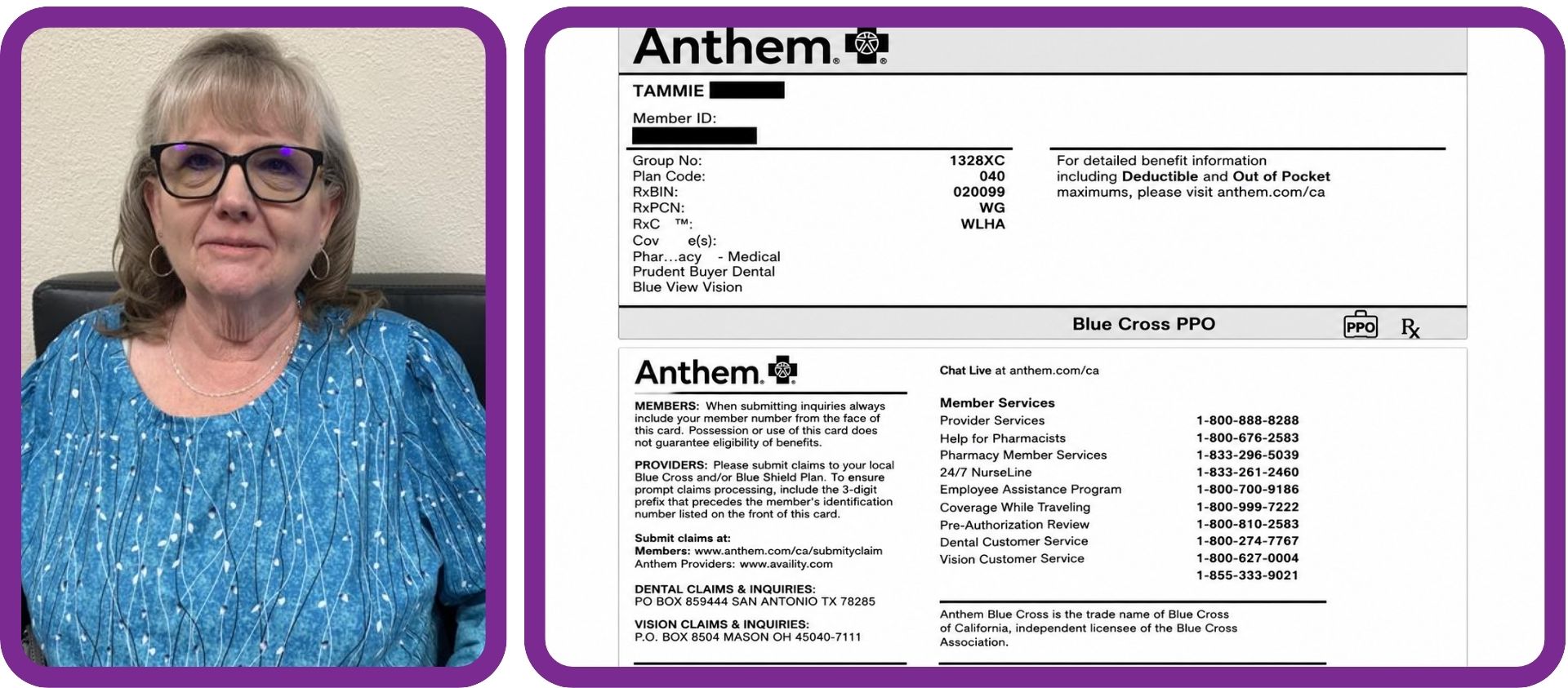
On April 2, 2026, our office called Anthem to verify coverage for our patient, Tammie. Anthem confirmed that Tammie's $1,000 individual deductible had already been met.
They stated her plan would cover 50% of the allowable amount for hearing aids and that she was eligible immediately. When we asked a straightforward question, "What is the allowable amount?" the representative refused to answer. Here is the official quote we got and the reference number for the call:
Subject to $1,000 Individual Deductible that has already been met. 50% coinsurance. Insurance pays 50% of the allowable amount. I was told the allowable amount cannot be quoted. I inquired if there was anyone else that I could speak to that could give me the allowable amount. I was told "no". Eligible every 36 months, eligible now. Call reference # I-49568517
Knowing that this benefit quote didn’t quite pass the smell test, our office called back twice more, pushing hard for a clear answer so we could tell Tammie her expected share of the cost. Each time, we were stonewalled: "No... I don't know... I can't tell you." Tammie even called Anthem herself, only to be given the exact same script.
We fit Tammie with her new devices on May 12, 2026, and submitted the claim on May 19, 2026. On June 11, 2026, the claim came back: Denied.
When we called Anthem to find out what happened, the representative blurted out the answer before we could even finish our sentence:
"Oh, the allowed amount for hearing aids is $0."
Let's do the math: 50% of $0 is... Wait for it... $0. Anthem knew from day one that her coverage was non-existent. Instead of being honest, they created weeks of chaos and administrative runarounds. Anthem = Lack of Integrity.
This isn't an isolated incident. Years ago, while practicing hearing care in Orange County, a similar situation occurred with another insurer who promised "100% of the allowed amount" while refusing to disclose the figure.
After spending over four clinical hours evaluating her hearing and fitting the patient, we discovered the "allowed amount" was set to $1 (and I can go on for days about the BLEEP storm that ensued after that one).
When we discussed the denial with Tammie, she wasn't even surprised. She told us she had been treated this way by Anthem before. That reaction says everything you need to know about corporate health insurance. The expectation of getting lied to and receiving the short end of the stick has been normalized.
The Payoff: Spend Your Money Where Quality Actually Lives
If you're going to pay out of pocket for hearing aids anyway (and with most insurance plans, including Medicare, you probably are), you ought to spend that money where hearing care expertise actually lives. More and more highly skilled and respected doctors are just walking away from the health insurance racquet instead of the daily fights with insurance companies.
Most doctor’s offices now spend nearly as many hours dealing with insurance companies as they do providing actual patient care. That just isn’t right.
At Visalia Hearing Center, We’ve Chosen a Different Path.
We don't play corporate games, we don't cut corners on care, and we spend the overwhelming majority of our time focused on exceptional patient outcomes.
We operate out of network because accepting discounted corporate payouts (anywhere from 30-60 cents on the dollar) forces clinics into high-volume assembly lines that prioritize quick sales over long-term patient relationships. Being in-network would be a tacit admission to lie to customers, that it’s okay to maximize shareholder value at the expense of the exceptional patient outcomes.
Visalia Hearing Center chooses to focus on speech mapping, wholistic care, and honest answers from day one. Once you understand how hearing challenges are really solved, it becomes clear that exceptional hearing care is the true solution, not a hollow promise on an insurance card.
Tired of Insurance Runarounds? Let’s Talk.
If you or someone you know has struggled with health insurance confusion or past hearing aid frustrations, you don't have to navigate it alone.
Get in touch with our team today to see how expert care can make a true difference for your hearing health.
Frequently Asked Questions
Q: What does "50% of the allowable amount" actually mean on my health insurance policy?
A: This is our favorite answer: “It depends!” While it sounds like your insurance company will cover half the cost of your hearing aids, the "allowable amount" is a hidden figure set entirely by the insurance provider. It can be any dollar amount the insurance company wants. If an insurer sets their allowable amount for hearing aids to $0 (or a nominal fee like $1), paying "50%" or even "100%" of that amount results in $0 in actual financial assistance. Insurers often refuse to disclose this figure prior to treatment, leaving patients with unexpected out-of-pocket costs after care has already been delivered.
So, a benefit like this could be really generous, or it could be a total bust. Our advice, any insurance company who doesn’t disclose in writing what their allowed amounts are, is a company you don’t/shouldn’t do business with. Find another insurance company. If you don’t have a choice in who your health insurance company is, we recommend you speak to your HR department and have them stick their proverbial foot up the insurance companies who know what until they disclose the information.
Q: How can insurance representatives claim I have hearing coverage if they ultimately pay nothing?
A: Insurance companies frequently hide behind vague terminology and rigid scripts to protect their profit margins; it's the DNA of their business model. When you understand how insurance companies make their money, by enticing as many people to sign up for their program/pay premiums and then pay out as little claims as possible, you understand why they create shenanigans described in this post.
It’s a modern-day bait and switch where you’re lured in under false pretenses and then laughed in your face when they show you the fine print they were hiding. I would have much more respect if they flat-out spoke the truth from the beginning and said, “we don’t cover hearing aids.”
Q: Why don’t insurance companies just cover 50% of the billed amount?
A: That may sound like a reasonable compromise, but we hate to tell you that insurance companies aren’t the only potential bad actors in the health care sphere. If this was how the plans were written, some providers (those without ethical principles) would just bill an ungodly number in order to get the service paid for in full (and sometimes even a little extra to pocket for themselves).
For example, if the hearing aids cost $5,000 and the insurance paid 50%, a provider could bill the insurance company for $10,000 (or more) and the insurance company would be obligated to pay more than what they agreed to. I have seen it. This isn’t right either, but it is what would happen if it were allowed. Health insurance companies are fighting against fraud and corruption, too.
Q: I had never thought of the health insurance company’s point of view before. Do you have a solution to this quagmire?
If I had it my way, health insurance companies would offer a flat amount towards hearing aids. $500, $2500, $5000, pick a number, any number and stick to it. This approach works very well for non-emergency type procedures where the costs are relatively fixed and relatively low (at least compared to other health care procedures).
This approach is very transparent and is very fair to all involved. These are our favorite hearing aid benefits to bill for because we and our patients know exactly what we’re going to receive, and patients can budget accordingly.
Q: If Visalia Hearing Center chooses to operate out-of-network with health insurance, how are you still able to bill my insurance?
A: Some insurances, especially PPOs, will allow for out of network (OON) billing. HMOs, including Medicare Advantage plans, almost never allow for OON billing. Sometimes benefits are better if you stay in network and most of the time it’s the same benefit whether it’s billed In- or Out- of Network.
Our stance hasn’t changed since the business started in 2022: “If your insurance allows for OON billing for hearing aids, we’d be happy to bill on your behalf.”