Call Us Today 559-625-8960

Call Us Today 559-625-8960

Call Us Today 559-625-8960

Speech and Language

Speech Services for Speech Sound Disorders

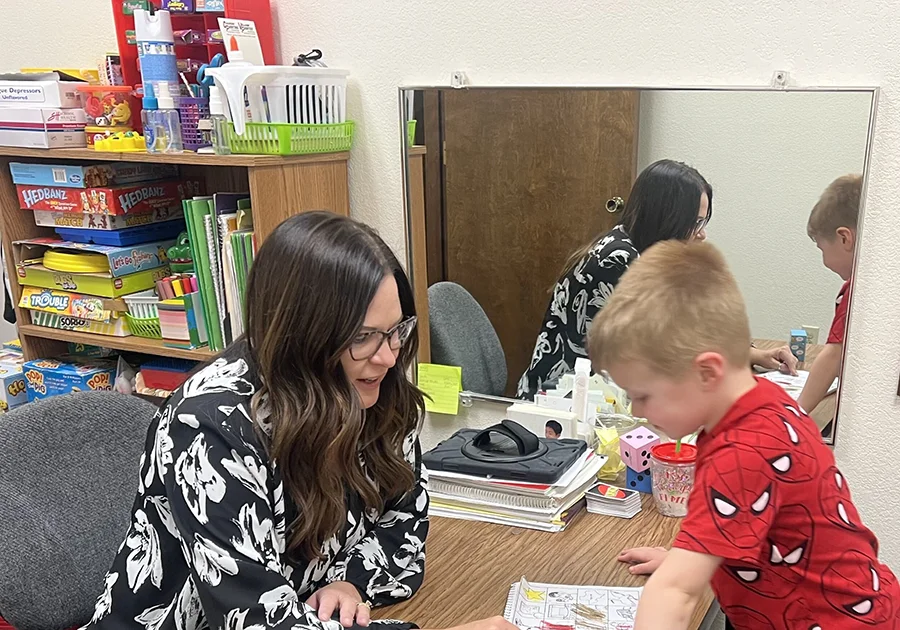
Developing appropriate language skills is crucial for your child’s overall growth. When children learn to express themselves clearly and understand others, it enhances their ability to build meaningful relationships, both at home and in school. Strong language skills also help them navigate emotions, reduce frustration, and solve problems more effectively. As they grow, these skills become essential for academic success, as children need to communicate their thoughts and ideas to understand and engage with lessons. By encouraging your child to develop appropriate language, you’re setting them up for better social, emotional, and educational outcomes. If you find that your child is struggling with communicating at home or at school, you’re in the right place. Our speech-language pathologist (SLP) specializes in identifying and treating a range of speech sound disorders to help your child develop clear and effective communication.

Speech and Language

Speech Services for Speech Sound Disorders

Developing appropriate language skills is crucial for your child’s overall growth. When children learn to express themselves clearly and understand others, it enhances their ability to build meaningful relationships, both at home and in school. Strong language skills also help them navigate emotions, reduce frustration, and solve problems more effectively. As they grow, these skills become essential for academic success, as children need to communicate their thoughts and ideas to understand and engage with lessons. By encouraging your child to develop appropriate language, you’re setting them up for better social, emotional, and educational outcomes. If you find that your child is struggling with communicating at home or at school, you’re in the right place. Our speech-language pathologist (SLP) specializes in identifying and treating a range of speech sound disorders to help your child develop clear and effective communication.

Speech and Language

Speech Services for Speech Sound Disorders

Developing appropriate language skills is crucial for your child’s overall growth. When children learn to express themselves clearly and understand others, it enhances their ability to build meaningful relationships, both at home and in school. Strong language skills also help them navigate emotions, reduce frustration, and solve problems more effectively. As they grow, these skills become essential for academic success, as children need to communicate their thoughts and ideas to understand and engage with lessons. By encouraging your child to develop appropriate language, you’re setting them up for better social, emotional, and educational outcomes. If you find that your child is struggling with communicating at home or at school, you’re in the right place. Our speech-language pathologist (SLP) specializes in identifying and treating a range of speech sound disorders to help your child develop clear and effective communication.

How to Identify & Treat Speech Disorders

If you have reason to believe that your child is having difficulty communicating, it’s important to seek an evaluation from a speech-language pathologist (SLP). Identifying issues early can make a significant difference in their development as they grow into capable adults.

An SLP will assess your child’s speech patterns, identify specific challenges, and create a personalized treatment plan to help improve their speech clarity and communication skills. Early intervention can lead to better outcomes in both social and academic settings, which will give your child the tools they need to express themselves confidently in the future.

Some areas we can help with include:

Childhood Apraxia of Speech (CAS)

CAS is a motor speech disorder where the brain struggles to plan and coordinate the precise movements needed for speech. Children with CAS may have difficulty producing sounds accurately, experience inconsistent speech errors, and struggle with prosody (rhythm and melody of speech). Identification: A thorough assessment, including speech sound production, motor planning tasks, and oral-motor skills evaluation. Treatment: Intensive, individualized therapy using multisensory cueing, repetition, and motor-based approaches like dynamic temporal and tactile cueing (DTTC) to build speech coordination and consistency.

Childhood Apraxia of Speech (CAS)

CAS is a motor speech disorder where the brain struggles to plan and coordinate the precise movements needed for speech. Children with CAS may have difficulty producing sounds accurately, experience inconsistent speech errors, and struggle with prosody (rhythm and melody of speech). Identification: A thorough assessment, including speech sound production, motor planning tasks, and oral-motor skills evaluation. Treatment: Intensive, individualized therapy using multisensory cueing, repetition, and motor-based approaches like dynamic temporal and tactile cueing (DTTC) to build speech coordination and consistency.

Childhood Apraxia of Speech (CAS)

CAS is a motor speech disorder where the brain struggles to plan and coordinate the precise movements needed for speech. Children with CAS may have difficulty producing sounds accurately, experience inconsistent speech errors, and struggle with prosody (rhythm and melody of speech). Identification: A thorough assessment, including speech sound production, motor planning tasks, and oral-motor skills evaluation. Treatment: Intensive, individualized therapy using multisensory cueing, repetition, and motor-based approaches like dynamic temporal and tactile cueing (DTTC) to build speech coordination and consistency.

Phonological Disorders

Phonological Disorders

Phonological Disorders

Articulation Disorders

Articulation Disorders

Articulation Disorders

Speech Services for Fluency Disorders

Fluency disorders affect the natural flow of speech and can impact communication in daily life. Our specialized services focus on identifying and treating:

Stuttering

Stuttering is characterized by disruptions in speech flow, such as repetitions (“I-I-I want”), prolongations (“ssssssunny day”), or blocks (a pause where no sound comes out). Stuttering can also be accompanied by physical tension, anxiety, or avoidance of speaking situations. Identification: A comprehensive assessment includes evaluating the frequency and types of speech disruptions, as well as analyzing emotional and situational factors that may influence stuttering. Treatment:Therapy focuses on fluency-shaping techniques (e.g., slow, controlled speech), stuttering modification strategies (e.g., reducing tension, easing into words), and building confidence through desensitization exercises and self-advocacy skills.

Stuttering

Stuttering is characterized by disruptions in speech flow, such as repetitions (“I-I-I want”), prolongations (“ssssssunny day”), or blocks (a pause where no sound comes out). Stuttering can also be accompanied by physical tension, anxiety, or avoidance of speaking situations. Identification: A comprehensive assessment includes evaluating the frequency and types of speech disruptions, as well as analyzing emotional and situational factors that may influence stuttering. Treatment:Therapy focuses on fluency-shaping techniques (e.g., slow, controlled speech), stuttering modification strategies (e.g., reducing tension, easing into words), and building confidence through desensitization exercises and self-advocacy skills.

Stuttering

Stuttering is characterized by disruptions in speech flow, such as repetitions (“I-I-I want”), prolongations (“ssssssunny day”), or blocks (a pause where no sound comes out). Stuttering can also be accompanied by physical tension, anxiety, or avoidance of speaking situations. Identification: A comprehensive assessment includes evaluating the frequency and types of speech disruptions, as well as analyzing emotional and situational factors that may influence stuttering. Treatment:Therapy focuses on fluency-shaping techniques (e.g., slow, controlled speech), stuttering modification strategies (e.g., reducing tension, easing into words), and building confidence through desensitization exercises and self-advocacy skills.

Cluttering

Cluttering

Cluttering

Speech & Language Evaluations and Treatment with Visalia Hearing Center

As parents ourselves, we know how concerning it can be if you’re worried about your child’s health or development. Our speech therapy services are tailored to meet every child’s needs, ensuring steady progress and improved communication skills from school into adult life.

For efficient management of your child’s speech struggles and clearer communication, you can rest assured that our team of specialists will provide professional guidance and support for every step of the way, making sure that your child is comfortable and stress-free throughout the assessment process.

Contact us today to schedule an evaluation and start your family’s journey toward clearer speech!

Speech & Language Evaluations and Treatment with Visalia Hearing Center

As parents ourselves, we know how concerning it can be if you’re worried about your child’s health or development. Our speech therapy services are tailored to meet every child’s needs, ensuring steady progress and improved communication skills from school into adult life.

For efficient management of your child’s speech struggles and clearer communication, you can rest assured that our team of specialists will provide professional guidance and support for every step of the way, making sure that your child is comfortable and stress-free throughout the assessment process.

Contact us today to schedule an evaluation and start your family’s journey toward clearer speech!

Speech & Language Evaluations and Treatment with Visalia Hearing Center

As parents ourselves, we know how concerning it can be if you’re worried about your child’s health or development. Our speech therapy services are tailored to meet every child’s needs, ensuring steady progress and improved communication skills from school into adult life.

For efficient management of your child’s speech struggles and clearer communication, you can rest assured that our team of specialists will provide professional guidance and support for every step of the way, making sure that your child is comfortable and stress-free throughout the assessment process.

Contact us today to schedule an evaluation and start your family’s journey toward clearer speech!

Frequently Asked Questions About Speech and Language

Appointment & Scheduling

How long are the therapy sessions?

Sessions vary with each individual and are dependent on the findings of the evaluation. If, for example, your child’s evaluation indicates a severe need, sessions could be recommended 30 minutes 2 times per week (or 90 minutes 1 time per week). If the evaluation indicates a mild need, then sessions are typically recommended at 30 minutes per week.

How long are the therapy sessions?

Sessions vary with each individual and are dependent on the findings of the evaluation. If, for example, your child’s evaluation indicates a severe need, sessions could be recommended 30 minutes 2 times per week (or 90 minutes 1 time per week). If the evaluation indicates a mild need, then sessions are typically recommended at 30 minutes per week.

How long are the therapy sessions?

Sessions vary with each individual and are dependent on the findings of the evaluation. If, for example, your child’s evaluation indicates a severe need, sessions could be recommended 30 minutes 2 times per week (or 90 minutes 1 time per week). If the evaluation indicates a mild need, then sessions are typically recommended at 30 minutes per week.

What are your hours?

What are your hours?

What are your hours?

How long will my child need therapy?

How long will my child need therapy?

How long will my child need therapy?

General timeline for phonological and/or articulation disorders

General timeline for phonological and/or articulation disorders

General timeline for phonological and/or articulation disorders

General Timeline for Stuttering

General Timeline for Stuttering

General Timeline for Stuttering

General Timeline for Tongue Thrust

General Timeline for Tongue Thrust

General Timeline for Tongue Thrust

General Questions

How do I know if my child needs speech therapy?

If you notice that your child struggles with speaking clearly, understanding words, or communicating effectively, they might benefit from speech therapy. Some signs to look for include difficulty pronouncing words, trouble forming sentences, challenges following directions, or a noticeable delay in speech compared to peers. If your child is becoming frustrated when trying to express themselves or if you notice that their speech is impacting their social interactions or school performance, it could be time to seek a professional evaluation. A speech-language pathologist can assess your child’s speech and language development and determine if therapy is needed to help them improve their communication skills.

How do I know if my child needs speech therapy?

If you notice that your child struggles with speaking clearly, understanding words, or communicating effectively, they might benefit from speech therapy. Some signs to look for include difficulty pronouncing words, trouble forming sentences, challenges following directions, or a noticeable delay in speech compared to peers. If your child is becoming frustrated when trying to express themselves or if you notice that their speech is impacting their social interactions or school performance, it could be time to seek a professional evaluation. A speech-language pathologist can assess your child’s speech and language development and determine if therapy is needed to help them improve their communication skills.

How do I know if my child needs speech therapy?

If you notice that your child struggles with speaking clearly, understanding words, or communicating effectively, they might benefit from speech therapy. Some signs to look for include difficulty pronouncing words, trouble forming sentences, challenges following directions, or a noticeable delay in speech compared to peers. If your child is becoming frustrated when trying to express themselves or if you notice that their speech is impacting their social interactions or school performance, it could be time to seek a professional evaluation. A speech-language pathologist can assess your child’s speech and language development and determine if therapy is needed to help them improve their communication skills.

Who will be working with my child?

Who will be working with my child?

Who will be working with my child?

You mention SLPAs. What are SLPA’s and how do they compare to an SLP?

You mention SLPAs. What are SLPA’s and how do they compare to an SLP?

You mention SLPAs. What are SLPA’s and how do they compare to an SLP?

Do you accept insurance?

Do you accept insurance?

Do you accept insurance?

How does your private practice speech therapy differ from school based speech therapy?

How does your private practice speech therapy differ from school based speech therapy?

How does your private practice speech therapy differ from school based speech therapy?

Do you offer group sessions?

Do you offer group sessions?

Do you offer group sessions?

Services

Do you work with adults?

Our SLP specializes in working with children between the ages of 3 and 14.

Do you work with adults?

Our SLP specializes in working with children between the ages of 3 and 14.

Do you work with adults?

Our SLP specializes in working with children between the ages of 3 and 14.

What types of speech and language challenges do you treat?

What types of speech and language challenges do you treat?

What types of speech and language challenges do you treat?

My orthodontist has recommended speech therapy for my child. What are they talking about?

My orthodontist has recommended speech therapy for my child. What are they talking about?

My orthodontist has recommended speech therapy for my child. What are they talking about?

©2025 Visalia Hearing Center | All Rights Reserved

©2025 Visalia Hearing Center | All Rights Reserved

©2025 Visalia Hearing Center | All Rights Reserved

Call Now